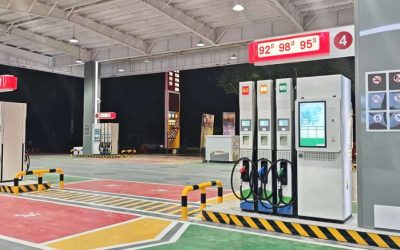
Petrol pump fraud is a growing concern in many parts of the world, often hidden in plain sight.
Petrol pump fraud is a growing concern in many parts of the world, often hidden in plain sight. While most gas stations operate ethically, a small number use deceptive tactics to manipulate the actual amount of fuel delivered — and the customer may never realize it.
This raises the question many people are now asking: how do petrol pumps cheat without getting caught?
These subtle tricks, when repeated across hundreds or thousands of transactions, can lead to major financial losses for both consumers and regulatory bodies.
This blog takes an in-depth look at how petrol pumps cheat and how they are modified or operated to cheat unsuspecting customers. We break down the most common fraud tactics at the pump and, more importantly, show you how to recognize the warning signs when fueling your vehicle. Whether you’re a consumer, petrol station operator, or simply curious about how petrol pumps cheat, this article will give you a clearer understanding of what to watch for — and why it matters.
How Do Petrol Pumps Cheat?
The Secret Ways Petrol Pumps Are Cheating You
Petrol dispenser fraud has become a growing global concern, with recent studies estimating that fuel theft and meter manipulation cost the petroleum retail industry over $20 billion USD annually worldwide. In regions with limited oversight, reports suggest that up to 15% of petrol stations engage in some form of dispenser cheating, leading to significant financial losses for consumers, reduced tax revenues for governments, and reputational damage for fuel retailers. But how do petrol pumps cheat, exactly?
In addition to undermining consumer trust, dispenser fraud distorts fair competition by allowing dishonest operators to undercut prices while quietly profiting from short deliveries. For example, a mere 3% discrepancy in fuel metering at a busy urban station can translate into tens of thousands of liters stolen each year — enough to fuel hundreds of vehicles.
Despite differing legal frameworks and technologies from country to country, most cheating tactics follow recognizable patterns. Drawing from global field investigations and enforcement cases, this article breaks down how petrol pumps cheat and highlights some of the most common methods used around the world.
Trick #1: Manipulating the Petrol Pump’s Mainboard and Microchips
One of the most common — and dangerous — forms of petrol pump fraud involves tampering with the mainboard and metering microchips. These components are the “brains” of the dispenser, responsible for converting real fuel flow into digital data.
Fraudsters exploit this by replacing the factory-installed board with a modified one. These counterfeit boards often carry reprogrammed firmware that alters the pulse count — the digital signal representing fuel volume. By manipulating the number of pulses per liter, the system displays more fuel delivered than the amount actually pumped into the vehicle.
For example, if the system is configured to treat 800 pulses as 1 liter of fuel, changing this to 1000 pulses per liter allows the dispenser to report more fuel delivered than was actually pumped. This manipulation can result in a 10%–15% overcharge per transaction, all while the system appears to function normally.
In more advanced schemes, the altered boards come equipped with remote toggling capabilities, allowing station operators to switch between a “cheat” mode and a “standard” mode — often in real time — to evade random inspections. Some modified chips even disable tax control functions or erase data logs, obstructing forensic auditing and enabling tax evasion.
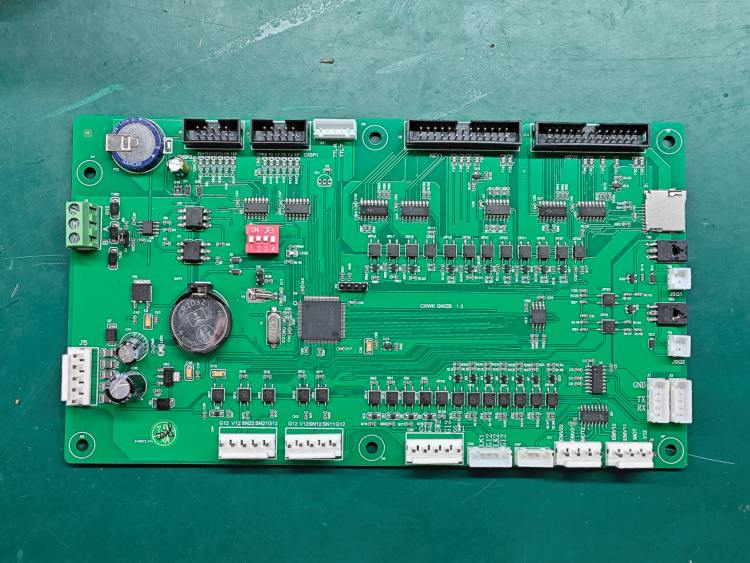
Petrol Pump Mainboard
Why It Works — And Why It’s Hard to Detect?
The real danger lies in how seamless the fraud appears:
- The dispenser’s screen shows accurate-looking figures.
- Receipts and transaction logs match expectations.
- But the actual fuel delivered may be 5–10% less than shown.
Since the control board is at the heart of the system, any alteration affects all recorded data, making it nearly impossible for customers — and sometimes even inspectors — to detect discrepancies without specialized tools.


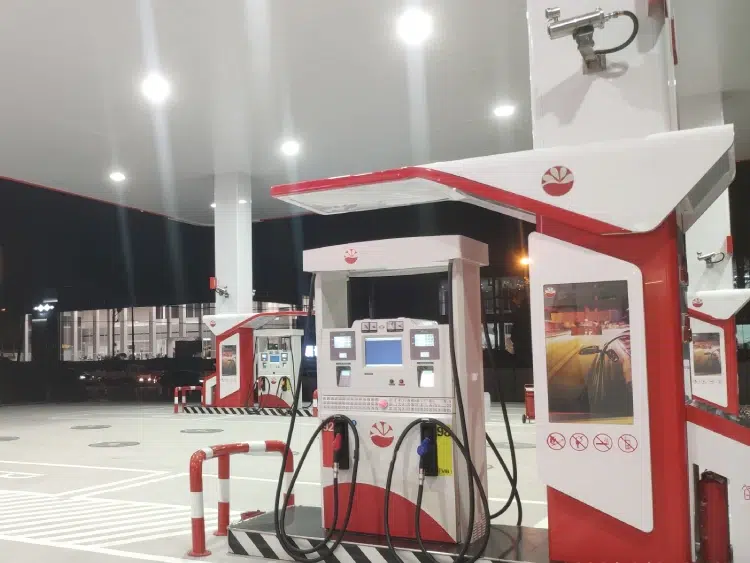
Built-In Defense: Digitally Encrypted Components
To stop this type of tampering at its root, smart petro pumps — like those from Station Energy Tech — use a digitally encrypted identity system.
Here’s how it works:
- The mainboard, encoder, and display each contain a built-in encrypted chip.
- These chips are assigned unique digital IDs, linking each part to a specific dispenser and the backend system.
- If any component is removed, replaced, or tampered with, the system detects the mismatch, locks the dispenser, and triggers an alarm immediately.
This makes it impossible to swap out parts or inject unauthorized chips without triggering the system’s anti-fraud response.
Tamper attempt? Pump shutdown.
This layered security is more than just a deterrent — it actively prevents fraud from continuing. The moment a mismatch is detected, fueling operations are halted, and both the station owner and the backend monitoring system are notified.
Trick #2: Remote-Controlled Pulse Signal Manipulation
Fraudsters may embed hidden electronic pulse generators inside petrol pumps to artificially inflate meter readings. This hidden circuit generates fake electrical pulses that mimic legitimate metering signals — tricking the dispenser into counting more fuel than is actually delivered. What does that mean?
The display shows inflated volume and price values, even though the physical fuel flow remains unchanged or significantly lower. This manipulation can short customers by 5–10% of the actual fuel volume — all without altering the pump’s visible performance or triggering standard alarms.
Traditional detection methods rely on visual checks or manual calibration, which often fail to catch real-time manipulation like this. You won’t know unless you’re actively comparing actual fuel output with the digital reading — every single time.
But here’s the thing — is it possible to check the fueling data in real-time every time?
Yes!
Our petrol pumps continuously encrypt and transmit every transaction to a secure backend. The system monitors real-time pulse data, matches it against historical records and flow trends, and flags any unusual behavior.
If a mismatch is detected — say, the pulse count doesn’t align with the expected fuel volume — the system immediately locks the pump and triggers an alert. This automatic response stops fraud before it becomes revenue loss.
Trick #3: Software-Based Parameter Manipulation Explained
Some fraudsters hack into the pump’s software to change key settings like the volume coefficient (how many pulses count as a liter), calibration data, or even the transaction timestamps. By tweaking these, they trick the pump into showing more fuel dispensed than actually delivered.
How do they do it? In some places, bad actors use special software tools accessed through hidden USB ports or touchscreen menus. These tools let them easily switch the pump between normal and “cheat” modes. When in cheat mode, the pump registers higher volumes or prices, ripping off customers without any visible signs.
As for the result? You pay for more fuel than you get.
More retail petrol pumps now use tamper-resistant hardware designs that eliminate external access points, preventing unauthorized devices from connecting.
On the software side, these pumps continuously monitor for any unauthorized changes to metering programs or parameters. If suspicious modifications are detected, the system automatically locks down, stopping the pump from operating.
Trick #4: Non-Resetting the Meter Display
In some remote or less-developed areas, you might still run into this outdated but sneaky scam: not resetting the meter before your fueling starts.
Here’s what happens:
You pull up to the pump, the meter already shows a number — say, 8.5 liters and $10. The station attendant starts fueling without clearing the previous reading. When the session ends, you see 18.5 liters and pay $21.
But in reality, you only got 10 liters, not 18.5. The previous customer already paid for their share—and now, you’ve paid for it too.
Because the display still looks legit. If you’re not paying attention, the numbers seem to add up. There’s no obvious sign unless you notice the reading before fueling begins. In busy or unfamiliar stations, most people simply miss it.
How to Avoid It
- Always check the meter before the nozzle goes in.
- Look for “00” on both the volume and price display.
- If it’s not reset, politely ask the attendant to clear it.
- If they refuse or act shady — it’s a red flag. Drive away.

Petrol Pump Display
Trick #5: Tampering with the Flow Meter or Encoder
This fraud targets the encoder that converts mechanical fuel flow into digital pulses. Cheaters alter gear ratios (e.g., swapping 20-tooth gears for 25-tooth versions) to reduce pulse counts per liter. Some also break calibration seals to manually recalibrate the system internally.
How it works:
- Fewer gear teeth = fewer electronic pulses generated
- Each pulse represents more fuel than it should
- Result: Dispenser shows 1L pumped while actually delivering 0.95L or less.
How to prevent it:
- Tamper-evident seals: Use numbered, cryptographic, or RFID-sealed encoders.
- Gear audits: Regularly verify gear specifications match manufacturer records.
- Data analytics: Monitor pulse-to-volume ratios for unexplained deviations.
- Physical inspections: Check for seal integrity/gear replacement signs during maintenance.
- Encrypted calibration: Require cryptographic keys for recalibration.
How to Tell If a Gas Station’s Pump Is Cheating?
Getting cheated at the gas pump is frustrating — you’re paying for fuel you’re not actually getting. Unfortunately, pump fraud still happens in some places. But with a little awareness, you can protect yourself.
Here are a few signs a gas station might be cheating:
1. The Fuel Fills Up ``Too Fast``
If the numbers on the pump (especially the volume in liters or gallons) go up very quickly, but your tank is nowhere near full, something could be wrong. Some scam pumps speed up the meter without increasing the actual fuel flow.
- Tip:Pay attention to how fast the pump runs. If it finishes in half the time compared to other stations, be careful.
2. You Paid for 40L, But Your Tank Only Holds 35L
Do you know how much fuel your car’s tank can hold? If the pump says it gave you more than your tank’s total capacity — red flag!
- Tip: Check your vehicle manual or do a quick Google search for your car model’s tank size. If you see impossible numbers, don’t ignore them.
3. No Zero Reset Before Fueling
A trusted pump always resets the screen to zero before fueling starts. If the attendant starts fueling while the meter still shows numbers — stop them immediately. That’s a classic trick.
- Tip: Watch the screen before they begin. It should read 0.00 for both volume and price.
4. Distracting Behavior
Some attendants may try to distract you while fueling — asking unrelated questions or pointing at your tires. It sounds harmless, but it could be a cover-up for pump tampering or short fueling.
- Tip:Stay alert. Don’t let your attention be pulled away during fueling.
5. Nozzle Clicking Too Early
If the nozzle clicks off way before your tank is full, then the pump may be under-delivering. Sometimes, they manipulate the flow rate to make it seem like your tank is full sooner than it really is.
- Tip:If it clicks too early, ask them to continue or switch pumps.
6. Different Readings on Pump vs. Receipt
Always double-check your receipt. If the amount on the receipt doesn’t match what you saw on the screen, or if no receipt is offered — that’s suspicious.
- Tip:Always ask for a receipt. Some cheats are hidden in transaction records.
7. Other customers complaining
Sometimes the best warning is from other people. If you hear drivers complaining or see a station with lots of bad reviews online — trust your gut and drive away.
- Tip:Check Google Reviews or ask locals, especially when you’re in a new city or country.
Fuel fraud is a global issue, but it’s not unbeatable. Many people often ask, “How do petrol pumps cheat?” The answer lies in a variety of tactics — from meter tampering to hidden electronic manipulation. By understanding these methods and recognizing the warning signs, both consumers and station operators can take steps to build a more transparent and fair fuel economy.
As a leading fuel dispenser manufacturer, Station Energy Tech is committed to more than just accuracy — we build smarter fuel dispensing systems to protect your business. From retail fueling to large-scale petrol station operations, our dispensers come equipped with real-time anti-fraud technology and intelligent monitoring. Backed by full business support, our solutions help station owners stay in control, reduce losses, and deliver honest service their customers can rely on.
Contact us for a turnkey petrol station solution.