Welcome to the new era of mobile fueling, where the fuel station comes to you.
This is not a futuristic concept—it’s a fast-growing global industry transforming the way fleets, industries, and even governments access energy. Instead of driving to a fixed station, you can now have gasoline or diesel delivered directly to your equipment, job site, or facility—anytime, anywhere.
In this guide, we’ll explore everything you need to know to start, operate, and scale a mobile fuel station business with confidence. Here’s what you’ll learn:
- What is a Mobile Fuel Station
- The Core Mobile Fuel Station Business Models
- Step-by-Step Mobile Fuel Station Business Plans
- Mobile Fuel Station Business Startup Costs
What is a Mobile Fuel Station?
A Self-Contained Fuel Dispensing Unit With Everything for Fuel Storage, Transfer, and Dispensing
A mobile fuel station is exactly what it sounds like—a gas station on wheels. It’s a self-contained, prefabricated, and portable fueling solution designed to deliver fuel wherever it’s needed, quickly. Unlike traditional fuel stations that require land, construction permits, and months of setup, a mobile fuel station can be deployed within minutes and start operating immediately.
This small fuel station is typically built on fuel tank trucks, skid-mounted platforms, or shipping containers, and comes equipped with everything — from storage tanks and pumps to meters, safety sensors, and fire suppression systems — all integrated into one compact structure. It’s designed for fast deployment, low-cost setup, and easy relocation, making it an ideal solution for temporary or remote fueling needs.
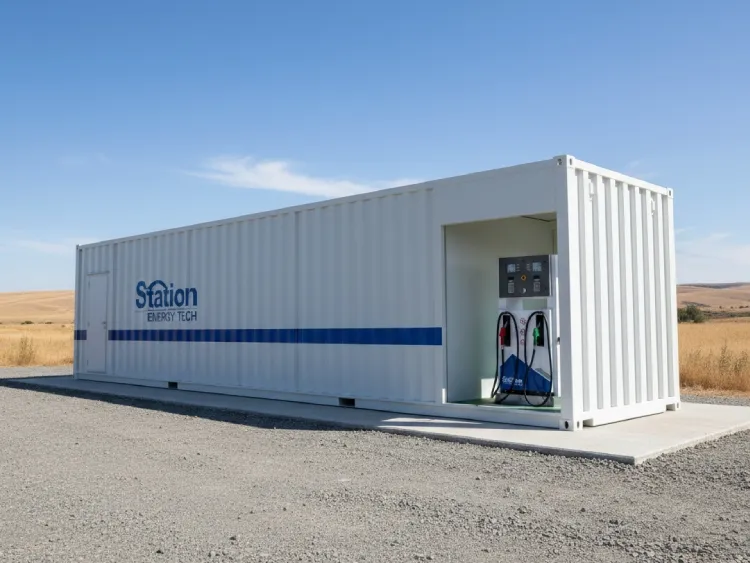


So, what is a mobile fuel station really solving? The growing demand for on-site fueling in industries like logistics, mining, agriculture, and construction. Fleets and operators can’t afford downtime caused by refueling detours. With mobile fuel delivery, fuel comes directly to vehicles or equipment, saving time and boosting efficiency.
According to market insights, the global demand for mobile fueling solutions has surged as businesses look for more flexible, environmentally friendly, and cost-efficient refueling options. As governments tighten regulations on fuel handling and infrastructure costs continue to rise, companies are turning to mobile fuel stations as a practical, scalable alternative.
Mobile Fuel Stations vs. Traditional Fuel Stations
Swipe table →
| Advantage | Mobile Fuel Station | Traditional Gas Station |
|---|---|---|
| Deployment Speed | Deployed and operational in under 24 hours | Takes months to build |
| Initial Investment | Starts from around $10,000 | Can cost $1-2 million |
| Location Flexibility | Deploy anywhere in a single day (e.g., construction sites, events) | Fixed location, requires permanent land |
| Site Coverage | One unit can serve 3x more locations annually by rotating between sites | Serves only one fixed location |
| Space Efficiency | 50% smaller footprint, fits in tight spaces | Requires large, dedicated land plot |
| Operating Costs | Reduces operating costs by up to 30% | Higher costs for utilities, staff, and maintenance |
| Reliability & Uptime | Industrial-grade design guarantees 100% uptime in demanding conditions | Potential downtime due to maintenance or system issues |
| Regulatory Compliance | Pre-certified designs face 70% fewer regulatory hurdles | Lengthy and complex permitting process |
Mobile Fuel Station Business Plans
3 Ready-to-Launch Mobile Fuel Station Business Models
For entrepreneurs and investors, entering the mobile fuel station business is no longer a backup plan—it’s a high-return opportunity. Depending on your market, budget, and operational goals, there are three main mobile fuel station business models:
- Container Fuel Station
- Skid-Mounted Fuel Station
- Mobile Fuel Truck
Each model serves a unique niche, but all share the same purpose: providing safe, fast, and cost-effective fuel delivery to places traditional stations can’t reach.
If you’re evaluating your investment options, understanding the mobile fuel station pricing for each model is key. Initial setup costs can vary widely based on tank capacity, safety systems, and customization level. In the following sections, we’ll break down these three mobile fuel station business models in detail—highlighting their structures, key advantages, and a transparent overview of mobile fuel station prices so you can plan your investment with confidence.
1. Container Fuel Station
A container fuel station is a fully self-contained, prefabricated mobile fueling system built inside a durable shipping container. Unlike standard above-ground storage tanks, this heavy-duty steel enclosure provides exceptional protection against accidents, theft, and environmental exposure — all while housing every essential component for safe and efficient fueling.
Inside, everything is seamlessly integrated: bulk fuel storage, automatic fuel dispensers, fire suppression systems, and electronic monitoring panels. It’s essentially a complete fuel station in a box — secure, compact, and ready to deploy wherever you need it.
This type of portable fuel station with pump performs all the same functions as a traditional gas station. It can handle multiple fuel types, offer secure payment systems, ensure accurate metering, and meet strict safety standards. The key difference? It’s far easier to move and set up. With its modular, plug-and-play design, you can transport and redeploy it to new sites in no time.

Perfect for construction zones, large infrastructure projects, and temporary operations, the containerized mobile fuel station delivers a reliable, high-volume fuel supply directly to where it’s needed — without the expense or long-term commitment of building a permanent station. And when the project wraps up, simply pack it up and move it to the next job site.
Structure and Components:
- Double-layer steel tanks for leak prevention and durability
- Explosion-proof partitions between electrical and fuel systems
- Integrated pump and dispenser units
- Fire suppression and safety sensors
- Automatic monitoring and control panels
- Ventilation and grounding systems
Applications:
- Long-term fueling for construction, mining, or logistics hubs
- Ports and industrial parks where conventional fixed stations are impractical or non-compliant
- Emergency or temporary fueling sites
- Agricultural and energy production zones
Business Potential:
For investors, containerized stations offer low-risk market entry with a fast return on investment (ROI). Startup costs are far lower than those of fixed stations, while relocation flexibility allows adaptation to market demand. In high-consumption or underserved regions, strong profit margins can often be achieved within 1 to 3 years.
Key Advantages:
- Self-contained and secure: All systems sealed in one steel unit
- Fast to deploy: Operational within days of arrival
- Prefabricated design: Requires minimal on-site setup and long-term maintenance.
- Global transportability: Standard container dimensions enable easy shipping.
- Scalable business model: Start small, expand as demand grows
Mobile Fuel Station Price:
Compared to building a conventional gas station, which can cost $1–2 million, containerized fuel stations offer dramatically lower entry costs. Prices vary based on configuration, but here’s what you can expect:
- Basic 20ft or Smaller Container Fuel Station: $10,000 to $18,000
- Standard 40ft Container Fuel Station: $18,000 to $25,000
- Premium Multi-Fuel System: $25,000 to $30,000+
Final Pricing Depends on:
- Container size
- Tank capacity (10,000L to 50,000L)
- Number of dispensers (1–4)
- Safety upgrades (leak detection, fire suppression)
- Monitoring systems (remote tank gauging, IoT)
Real Project:
Station Energy Tech recently delivered a 40ft diesel fuel container to a client in Senegal. This containerized fuel station included a 50,000L tank, dual-nozzle diesel dispensers, automatic leak detection, and fire suppression. The setup was completed in just six hours, reducing downtime and fuel transport costs. The total project cost was under $29,000, including installation.
Go to this page to learn more about this project.
Skid-Mounted Fuel Station
Think of the skid-mounted fuel station as the leaner, more flexible version of the container fuel station. This design mounts the fuel tank, pump, dispenser, and safety systems on a heavy-duty steel skid frame, forming a single, compact structure that’s ready to move.
Unlike the enclosed container type, the skid-mounted fuel station features an open-frame design, with components exposed to the elements. That might sound like a compromise, but in reality, it’s a strategic advantage. Without container walls, the entire unit becomes lighter, easier to transport, and quicker to deploy.
Because the tank isn’t restricted to shipping container dimensions, it can be customized to different shapes and capacities. That flexibility makes it ideal for operations that need specific fuel volumes or compact layouts. Whether you’re powering a temporary site, a remote project, or a private fleet, the skid-mounted setup offers unmatched mobility and efficiency.

Structure and Components:
- A standard skid-mounted unit includes:
- Single or double-layer fuel tanks with capacities from 5,000 to 50,000 liters
- Integrated dispensing pump and hose reels
- Digital meters for accurate fuel delivery
- Optional canopy or weather protection cover
- Emergency shut-off and safety control systems
The unit can be lifted using cranes or forklifts and installed on level ground without foundation work. It connects directly to a generator or power source, allowing flexible setup even in remote locations.
Applications:
- Ideal for internal/private fleet fueling where simplicity and low initial investment are key.
- Perfect for temporary, on-site fuel solutions, allowing rapid deployment for projects that move or have defined short lifecycles.
- Best suited for cost-conscious operations that prioritize quick setup and self-managed fuel logistics over public retail functionality.
- A reliable choice for any organization (contractors, logistics, government) needing a dedicated, scalable, and easy-to-relocate fuel supply chain.
Business Potential:
From a business perspective, this model requires moderate investment and provides fast turnover. Since setup and relocation costs are minimal, it allows owners to serve multiple projects using the same equipment over its lifetime.
For example, a single skid-mounted unit can serve multiple construction sites across the year, maximizing equipment utilization and profit. Additionally, it’s compatible with mobile fueling contracts, providing flexible service to private fleets or industries.
Key Advantages:
- Highly portable: Can be relocated within hours
- Compact and low-cost: Perfect for project-based operations
- Easy setup: No permanent foundation required
- Customizable: Choose from multiple capacities and pump types
- Low maintenance: Simple structure and accessible components
- Ideal for rapid deployment during emergencies or short-term contracts
The skid-mounted system’s fast mobility and operational simplicity make it one of the most profitable models for small and mid-sized fuel service providers.
Pricing:
Prices vary based on capacity, components, and customization, but here’s a realistic range for skid-mounted systems:
- Compact Units (e.g., 4,000L–6,000L) : Around $1,100–$1,500 for basic setups, ideal for small operations .
- Mid-Range Systems : Prices can reach $8,800–$8,880 for higher-capacity tanks with enhanced safety and dispensing features .
- High-Capacity or Customized Units : Premium systems, such as those with dual dispensers or LNG/LPG compatibility, may cost $120,000–$600,000 .
Final Pricing Depends on:
- Tank capacity (e.g., 1,000L–30,000L)
- Fuel type (diesel, gasoline, LNG, etc.)
- Safety features (leak detection, fire suppression)
- Automation (remote monitoring, ATG systems)
Investing in a skid-mounted station offers flexibility and rapid deployment at a fraction of the cost of fixed infrastructure.
Mobile Fuel Truck
The mobile fuel truck redefines the concept of fueling, transforming traditional refueling into a fast, on-demand service that meets customers wherever they are. Instead of driving to a traditional gas station, fuel is delivered directly to the point of need through a fully equipped mobile fueling unit.
Each mobile fuel truck is built on a certified tanker chassis and features a small fuel dispenser. This highly flexible setup enables fueling businesses to provide efficient, on-site fuel delivery services for industries that prioritize convenience and productivity.
This mobile fuel delivery model is driven by major global trends: fleets seeking to minimize downtime, companies operating in remote areas, and the growing preference for service-based solutions. Whether in logistics, construction, or emergency response, mobile fuel services help organizations save valuable time and keep operations running seamlessly.

With a mobile fuel station truck, operators can provide scheduled refueling, rapid emergency delivery, and dedicated fleet fueling—effectively transforming fuel provision into a managed, end-to-end service.
Structure and Components:
- A fuel tank with a capacity ranging from 2,000 to 20,000 liters, depending on the truck size and operational requirements.
- Integrated mobile fuel dispensers and meters that ensure precise fuel delivery to customers.
- Automatic fuel nozzles for easy dispensing and fuel flow control.
- Fuel hose with automatic retraction and reel
- Safety systems like emergency shut-off valves, fire suppression equipment, and spill containment features.
- GPS and real-time tracking to optimize delivery routes and manage fleet operations efficiently.
Business Potential:
The demand for mobile fuel services has grown significantly due to the increasing need for convenient, on-demand fuel delivery. Entrepreneurs can capitalize on this growing trend by offering a flexible, cost-effective solution to customers in need of efficient fueling.
Launching a mobile fuel truck business requires exceptionally low startup capital. This allows companies to scale up rapidly while immediately offering a wide range of specialized fueling services tailored precisely to client needs. By serving multiple customers daily, mobile fuel trucks become a high-margin, high-growth venture with accelerated expansion potential.
Key Advantages:
- Convenience: Bring the fuel directly to your customers, saving them time and effort.
- Flexibility: The ability to service multiple locations and adjust routes based on demand.
- Cost-Effective: Lower initial investment compared to building a fixed gas station, with lower operating costs.
- On-Demand Service: Perfect for industries and businesses with urgent or scheduled fueling needs.
- Time-Saving: Eliminate downtime for businesses by ensuring continuous operations without trips to fuel stations.
- Scalable Business Model: Start with a single truck and expand your fleet as demand grows.
Pricing:
The mobile fuel dispenser truck is a highly affordable solution for businesses looking to provide on-demand fueling services. Starting at just $435 USD for a basic single dispenser unit, it’s one of the most cost-effective ways to get into the fuel delivery business.
Here’s an overview of mobile fuel dispenser truck pricing based on configuration:
- Single-nozzle Fuel Dispenser: $435 USD
- Single-nozzle Fuel Dispenser with Upgrades: $550 – $900 USD
- Multi-nozzle Fuel Dispenser: $1,200 – $1,500 USD
Go to this page for more mobile fuel dispenser configurations and prices.
Fuel Tank Capacity Pricing:
- 3,000 – 5,000 liters: $10,000 – $15,000
- 6,000 – 10,000 liters: $15,000 – $20,000
- 10,000 – 20,000 liters: $20,000 – $30,000
Additional Costs:
- Truck Chassis: Prices range from $10,000 to $30,000 depending on size and specifications.
- Upgrades and Add-ons: Optional features such as IoT monitoring systems, digital meters, and safety systems (fire suppression, spill containment) can add $1,000 to $5,000 depending on the features selected.
Ready to Power Your Success with a Custom Mobile Fuel Station?
Your Complete Solution. Expertly Built. Priced Direct.
You’ve seen the potential. Now, it’s time to partner with the experts who can make it happen.
As a leading manufacturer with years of experience, we don’t just sell mobile fuel stations—we deliver tailored fueling solutions for a global clientele. Whatever your industry or ambition, we provide the precise technology and expertise to launch and scale your operation.
- We Build It All: Skid-mounted, containerized, and vehicle-mounted models.
- Unbeatable Factory-Direct Pricing: Cut out the middleman and get superior quality for less.
- End-to-End Support: From concept to compliance and after-sales service, we ensure your success.
Stop researching and start building. Contact us today for a free, no-obligation quote. Let’s discuss your project and turn your mobile fueling business into a reality.
Contact Station Energy Tech today for a free consultation and discover how our mobile fuel stations can redefine your fueling operations.
Your future in fuel starts here.

