How Fuel Dispenser Works: A Closer Look at the Process from Start to Finish
You pull into a gas station, swipe your card, and lift the nozzle. It’s a routine we barely think about. But in that moment, have you ever stopped to wonder how a fuel dispenser works?
That familiar fuel dispensing unit is far more than just a hose and a nozzle. It’s a sophisticated piece of engineering—a precise piece of petroleum equipment combining electronics and mechanics—designed to deliver fuel safely, efficiently, and accurately every single time.
In this blog, we’ll explore the entire refueling process, from the moment you lift the fuel nozzle to when you refuel your tank.
What is a Fuel Dispenser?
Submersible Pump vs. Gear Pump Fuel Dispenser Working Principles Explained
A fuel dispenser is a crucial piece of petroleum equipment found at gas stations, designed to safely and efficiently deliver fuel from underground storage tanks into a vehicle’s fuel tank. It typically consists of several key components, including a pump, nozzle, flow meter, filter, hose, and control system, all working together to ensure an accurate and safe refueling experience.
To dive deeper into the individual parts of a fuel dispenser, check out our detailed guide on What Are the Parts of a Fuel Dispenser? where we break down each fuel dispenser part and its role in the fueling process.
All fuel dispensers do the same job, but how fuel dispensers work can vary depending on the system used. The key difference lies in the pump. Primarily, there are two types of fuel dispensers on the market: Submersible Pump Fuel Dispensers and Gear Pump (Suction Pump) Fuel Dispensers. Let’s dive into each to understand how a fuel dispenser works in different setups.
Submersible Pump Fuel Dispenser:
This is what the inside of a submersible pump fuel dispenser looks like. As you can see, its internal structure is noticeably simpler. That’s because the main hardware—the turbine pump—isn’t here. It’s submerged directly in the underground fuel tank.
Here’s how it works: that remote pump pushes pressurized fuel up through the pipes to the dispenser, so the fuel is ready to go the moment you lift the nozzle. This setup is the standard at most modern gas stations.
For a complete look at why this system is so prevalent, including its key benefits, check out our full blog: Fuel Submersible Pump 101.

Gear Pump Fuel Dispensers:
Here’s a look inside a gear pump fuel dispenser. As you can see in the image, the main components are laid out clearly: the flow meter at the top, the gear pump in the middle, and the motor at the bottom.
So, how does it work? This type of dispenser operates on a positive displacement principle. The motor drives the gear pump—which uses two interlocking gears—to create suction, pulling fuel up from the underground tank and pushing it through the hose into your vehicle.
It’s a straightforward and robust design. That reliability makes it a practical, cost-effective solution for smaller stations, remote locations, or mobile fueling units where a central submersible pump isn’t feasible.

How Fuel Dispenser Works: Step-by-Step Breakdown
Submersible Pump vs. Gear Pump Fuel Dispenser Working Principles Explained
All fuel dispensers might look similar on the outside, but their internal working principles can be very different depending on the pumping system they use. Submersible pump and gear pump fuel dispensers operate on distinct principles, mainly due to their structural differences, which affect how a fuel dispenser works and how fuel is drawn from the underground tanks to your vehicle.
Let’s break down how a fuel dispenser works in action, focusing on the two different pumping methods.
Step 1: Authorization and Valve Opening
It all starts when you swipe your card or pre-pay at the station. This sends a signal to the station’s backend system, which then checks for authorization. Once the payment is processed and authorized, the system signals the fuel pump to prepare for fueling.
When you lift the nozzle, an internal safety valve opens, and the fuel dispenser pump is triggered to start pumping fuel. While this process is similar in both systems, the way the fuel is actually moved from the underground tank to your vehicle varies depending on the pump type.
Step 2: Fuel Suction – This is where the real difference lies
It all starts when you swipe your card or pre-pay at the station. This sends a signal to the station’s backend system, which then checks for authorization. Once the payment is processed and authorized, the system signals the fuel pump to prepare for fueling.
When you lift the nozzle, an internal safety valve opens, and the fuel dispenser pump is triggered to start pumping fuel. While this process is similar in both systems, the way the fuel is actually moved from the underground tank to your vehicle varies depending on the pump type.
Submersible Pump Fuel Dispenser:
In a submersible pump system, the fuel dispenser pump is placed at the bottom of the underground storage tank, completely submerged in fuel. The pump is powered by an electric motor, which drives a turbine to create the pressure needed to push fuel through the underground pipes toward the dispensers.
When the nozzle is lifted, the fuel dispenser signals the pump to start. The submersible pump pushes high-pressure fuel through the pipes to the dispenser. This means that the fuel is already pressurized before it even reaches the dispenser, allowing for a faster, more efficient delivery. Because the pump is located underground, the fuel dispensing process is quieter, and the dispenser doesn’t require its own powerful pumping mechanism.
Gear Pump Fuel Dispenser:
Each fuel dispenser has its own self-contained pump located inside the dispenser unit. This fuel dispenser pump works using a positive displacement principle, where two interlocking gears rotate to draw in fuel. As the gears turn, they create small pockets of fuel, which are transferred through the gears and pushed into the delivery hose.
In this system, fuel is drawn from the underground tank to the nozzle via the gear pump, which requires more mechanical effort at the point of sale. This means that the pump needs to generate enough suction to pull the fuel up and through the system, which can be a little louder than the submersible system. However, it offers flexibility since each dispenser operates independently.
Submersible Pump Fuel Dispenser Working Principle:

Gear Pump Fuel Dispenser Working Principle:

Step 3: Flow Measurement and Accuracy
Once the fuel starts flowing, both systems rely on a flow meter to ensure that the right amount of fuel is delivered.
Both the submersible pump and gear pump dispensers use a positive displacement meter, where fuel flows through a piston that moves back and forth. This piston generates electronic pulses for each unit of fuel dispensed. These pulses are sent to the computer inside the dispenser, which calculates the total volume of fuel delivered and displays the cost in real-time.
Step 4: Vapor Recovery and Environmental Safety
As fuel is pumped into your car, fuel vapors are displaced into the air. To prevent these harmful emissions from escaping, modern dispensers are equipped with a vapor recovery system. The nozzle creates a seal around the vehicle’s fuel port, and a separate hose draws the vapors back into the underground storage tank using a vacuum.
Step 5: Automatic Shut-off
The fuel dispenser is also equipped with a mechanical shut-off valve that prevents overfilling. When fuel in your tank covers the nozzle’s tip, it creates a vacuum that instantly snaps the handle shut, stopping the flow to prevent spills.
Step 6: Transaction Completion
Once the fueling process is complete, you hang up the nozzle, and the dispenser’s computer sends the transaction data (gallons dispensed and total cost) to the point-of-sale (POS) system, which processes the payment. The main valve in the dispenser then closes, stopping the fuel flow.
How Does A Mobile Fuel Dispenser Work?
On-demand Refueling Solution
You know the routine: drive to the gas station, wait in line, and pump the fuel yourself. But what if the gas station could come to you?
There’s a more mobile fueling solution that’s gaining popularity: mobile fuel dispensers. These are not the complex, multi-hose islands you see at retail gas stations. A mobile fuel dispenser is a self-contained fuel dispensing system designed for simplicity and portability. Its core components—a pump, a flow meter, and a nozzle—are integrated into a single, compact unit that is directly installed on a fuel tanker truck or a smaller transport tank.
This brings us to a key advantage: significantly lower equipment costs. Because they are designed for a single, dedicated purpose and lack the bulky housing, advanced user interfaces, and multiple payment terminals required by retail dispensers, mobile dispensers are far less expensive to manufacture and purchase. This lower upfront cost makes them a highly cost-effective solution for businesses that need to provide fuel on-site without investing in a permanent, expensive fueling station. It’s all about getting the essential function of fueling at a fraction of the price.
The Refueling Process – How It Works
Operating a mobile fuel dispenser is a streamlined process built for efficiency and accuracy. Here’s how it works:
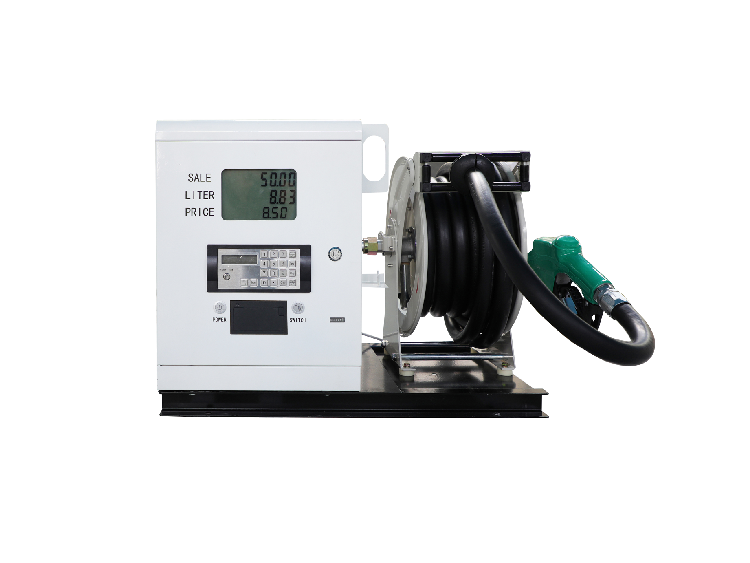
- Step 1: System Startup & Filtration
The operator positions the vehicle and activates the system. An electric pump pulls fuel from the onboard tank, first sending it through a filter to remove contaminants.
- Step 2: Pressurization & Measurement
The clean fuel is pressurized and then directed into the flow measurement transducer. As fuel moves through, it drives a piston or rotor, with each movement corresponding to a precise volume of fuel.
- Step 3: Data Processing
The transducer’s output is linked to an encoder, which generates electronic pulse signals for each unit of fuel measured. These signals are sent to dual microprocessors: one calculates the total volume dispensed, while the other processes the data for display, showing volume and cost in real-time.
- Step 4: Fuel Delivery
The measured fuel then passes through a solenoid valve and out through the nozzle into the vehicle’s tank, completing the closed-loop refueling process.
Station Energy Tech
A Trusted Fuel Dispenser Manufacturer Chosen by Hundreds.
At Station Energy Tech, we specialize in manufacturing state-of-the-art automatic fuel dispensers designed to meet the needs of various industries and applications. Whether you’re running a small service station or a large-scale commercial fleet fueling operation, our fuel dispensers are built to deliver reliability, accuracy, and efficiency.
We offer customizable solutions, allowing you to modify and personalize your dispenser configurations to perfectly align with your business requirements. Visit our portfolio to explore the wide range of fuel dispensers we’ve designed for clients across the globe, and see how we can help you enhance your fueling operations with the latest technology.
Don’t settle for less—contact us today to learn more about how our fuel dispensers can revolutionize your business. Let us help you fuel success, safely and efficiently.


