Nobody goes online to buy fuel dispenser equipment just to browse. You’re either a few weeks out from opening a new forecourt, swapping out aging pumps that keep drifting out of calibration, or setting up a fleet depot that’s tired of sending drivers off-site every time tanks run dry. Whatever brought you here, the decision usually comes down to the same handful of questions: which type actually fits how you’ll use it, which specs matter versus which are marketing fluff, what a fair price looks like, and who you can actually trust to stand behind the equipment after the sale.
This guide walks through all of it — in plain language, in the right order — so by the time you’re ready to buy fuel dispenser equipment, you know exactly what you’re getting and why.
Step 1: Figure Out Which Category You Actually Need
Here’s the mistake that trips up most buyers: comparing models before picking a category. When you buy fuel dispenser equipment for the wrong application, no feature list makes up for a poor fit. Start here first.
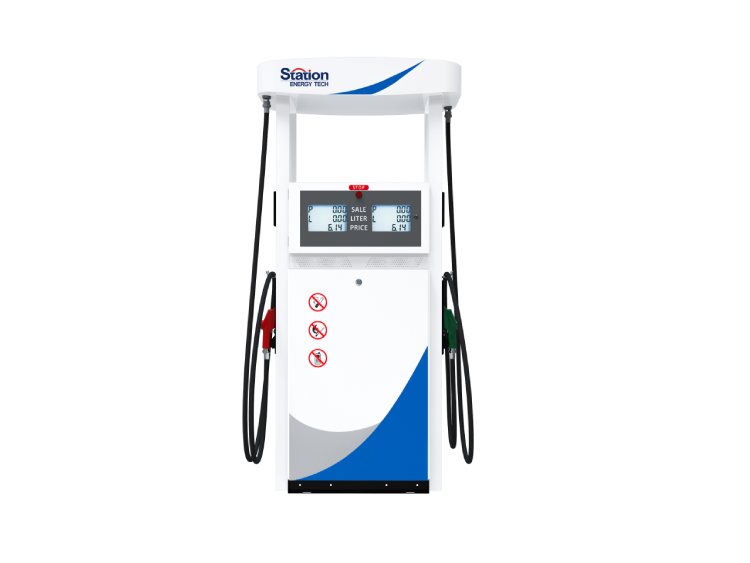
Retail Fuel Dispensers
Retail fuel dispensers are designed for gas stations and convenience store forecourts — full-size, dual-sided, and built for customer-facing use, with branding panels, LED lighting, and optional touchscreens. Your forecourt is also your marketing space, so aesthetics matter.




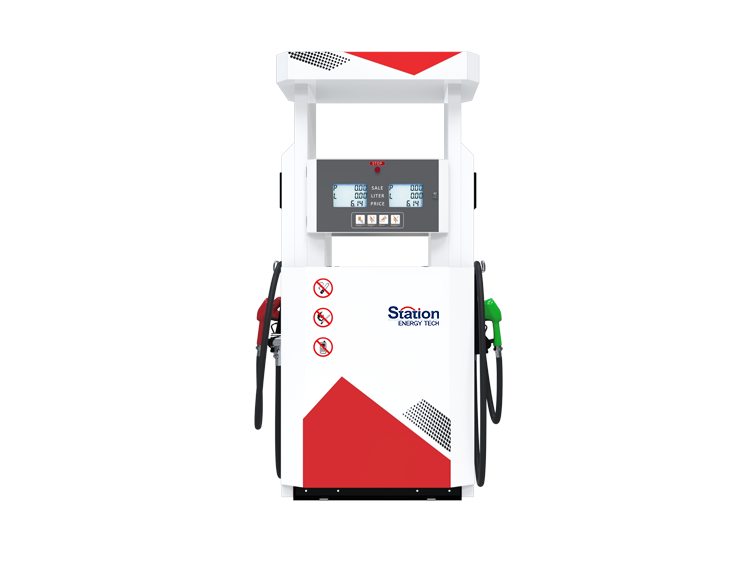
Commercial Fuel Dispensers
Commercial fuel dispensers are the workhorses of fleet yards and logistics depots. Built for operations that fuel their own vehicles on-site — fewer frills, tougher construction, and a focus on throughput and uptime.

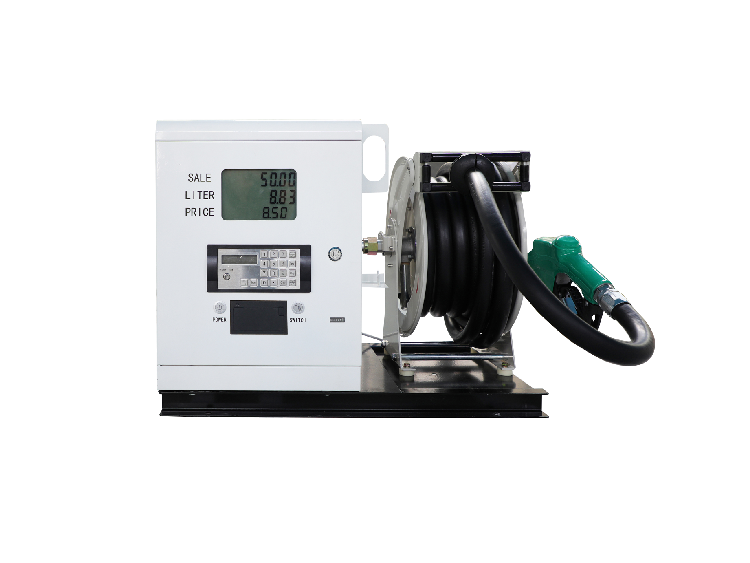
Small Fuel Dispensers
Small fuel dispensers suit lower-volume or private fueling: a single-fleet operation, a generator bank, a construction site storage tank. Compact footprint, lower upfront cost, same core hardware as full-size units.


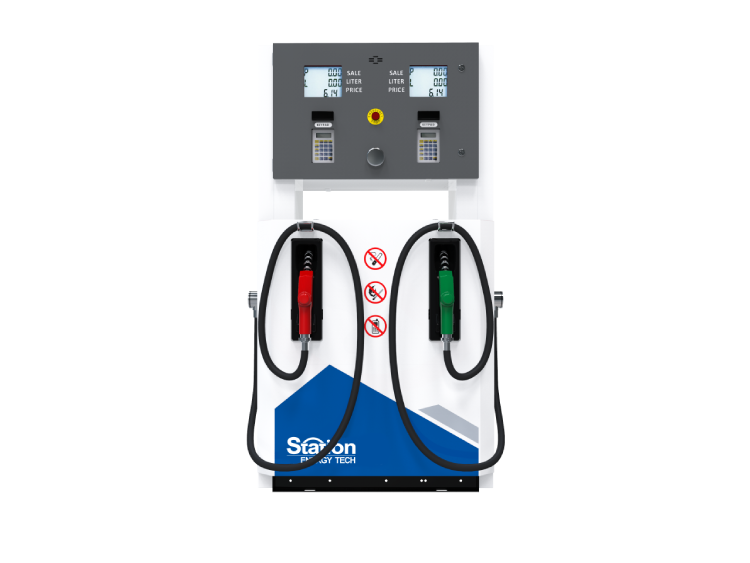
High-flow Fuel Dispensers
High-flow fuel dispensers exist for one reason — to move a lot of fuel fast. Designed for trucks, buses, and large equipment, these units run at flow rates that make a standard dispenser a bottleneck.
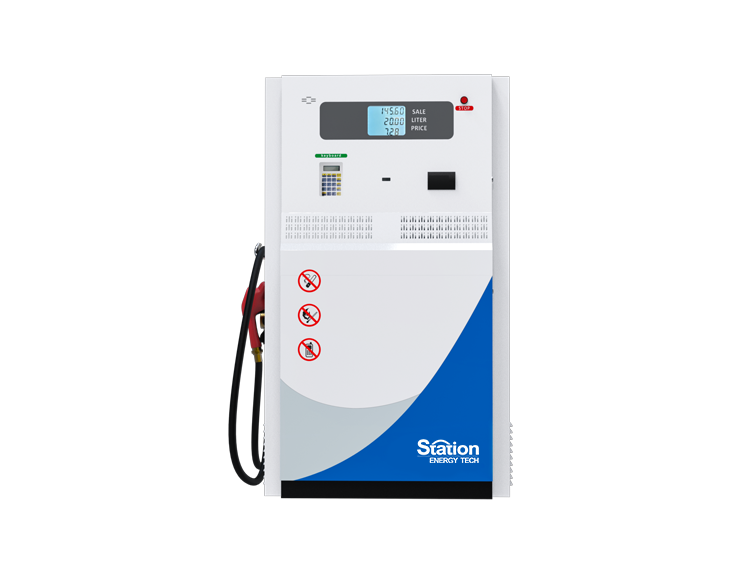
* The STATION™ fuel dispenser lineup covers all categories — retail, commercial, small, industrial, and high-flow — with each series showing configurations, photos, and pricing guidance side by side. Rather than describing every model in text here, click and see the page: images tell the story better than copy ever could.
One more decision underneath all five categories: suction-type vs. submersible-type.
| Feature | Suction-Type | Submersible-Type |
|---|---|---|
| Pump location | Inside the dispenser cabinet | In-tank, submerged in fuel |
| How fuel moves | Pulled from the tank | Pushed up to the dispenser |
| Best for | Above-ground tanks, short runs, simple setups | Underground tanks, high-traffic, multi-dispenser sites |
| Upfront cost | Lower | Higher (requires in-tank pump) |
| Maintenance access | Easier — all components above ground | Tank work required for pump service |
Both configurations are available across the full STATION™ lineup. Our team can walk you through which makes more sense for your specific site layout.
Step 2: The Specs That Actually Drive the Decision
With the category settled, the real evaluation happens at the spec level. Some factors are obvious. A few of the most important ones for international buyers rarely make it into English-language guides at all.
Flow Rate: Match It to Traffic, Not Budget
Flow rate determines how fast a tank fills — and it should reflect your actual traffic volume, not just what fits the budget.
| Application | Target Flow Rate |
|---|---|
| Retail forecourt (cars, light trucks) | 5–50 L/min |
| Busier retail / mixed fleet | Up to 75 L/min |
| Commercial fleet and truck stops | 120–300 L/min |
* The STATION™ 32H high-flow dispenser hits up to 300 L/min — enough to fill a 60-gallon saddle tank in under two minutes. For a busy depot, the difference between 50 and 300 L/min is the difference between a three-minute stop and a fifteen-minute backup at the pump.
Fuel Compatibility
Confirm the unit handles what you’ll actually sell: gasoline, diesel, kerosene, ethanol blends (E10, E85), or biodiesel. Multi-nozzle fuel dispensers manage two or more fuel types from one cabinet — useful when you want petrol and diesel available on a single island without doubling your equipment footprint.
Certifications — The Part Most Guides Get Wrong
This is where international buyers consistently get shortchanged by content written for a US audience. American-focused buying guides default to NTEP and UL, which are largely irrelevant to a buyer in Kenya, Vietnam, or the UAE. When you buy fuel dispenser equipment for markets outside North America, these are the certifications that actually matter:
- OIML — The global standard for metering accuracy, recognized in most countries worldwide. OIML certification means measurement has been validated by an independent international body, not just a manufacturer’s internal claim.
- CE — Required for EU market access; widely accepted as a quality benchmark internationally.
- ATEX / IECEx — Explosion-proof standards for hazardous environments. Relevant for any fueling operation with flammable liquids and electrical components in proximity.
- ISO 9001 / 14001 / 45001 — Quality management, environmental responsibility, and workplace safety. These speak to how the manufacturer operates, not just the product itself.
Step 3: New vs. Used — and Why Factory-Direct Changes the Math
When the budget is tight, used dispensers look attractive on paper. But run the numbers on total cost of ownership, and the picture shifts.
| Comparison | Used Dispenser | New, Factory-Direct |
|---|---|---|
| Upfront cost | Lower | Higher |
| Calibration history | Unknown; often requires re-certification | Tested and certified before shipment |
| Spare parts | Frequently discontinued | Currently manufactured and stocked |
| Warranty | Rarely included | Standard from day one |
| Year-one repair costs | Common and hard to predict | Minimal — components are new |
| Compliance risk | Older units may not meet current standards | Meets current certifications |
The pattern holds consistently: apparent savings on a used unit come back as repair and compliance costs within the first twelve months. When you buy fuel dispenser equipment second-hand, you’re also buying someone else’s maintenance backlog — calibration drift, worn internal valves, discontinued parts — without knowing exactly what you’re inheriting.
There’s a second fork here: buying from a manufacturer versus buying through a dealer or reseller. When you buy fuel dispenser equipment directly from the factory, the cost structure is different: no dealer markup layered on top, direct access to the engineering team for customization or configuration changes, and no middleman sitting between you and the people who actually built it.
Step 4: Understanding What It Costs to Buy Fuel Dispenser Equipment
Here’s the honest answer: it depends heavily on configuration, and that’s not a dodge — it’s why most serious manufacturers don’t publish a fixed price sheet.
Factors that push the price up:
- Nozzle count — more fueling points per unit means more internal components
- Flow rate — high-flow configurations carry a real cost premium
- Brand — established Western brands (Gilbarco, Wayne, Tatsuno) command higher prices than comparable-quality manufacturing from newer sources
- Smart features — touchscreens, vapor recovery systems, fuel management software, multimedia displays
- Customization — branded panels, custom colors, unique cabinet layouts
And don’t forget the total cost of importing:
- Freight — often the largest variable cost for international orders, but even after shipping, factory-direct pricing frequently undercuts local alternatives
- Import duties and VAT — vary significantly by country; always research before finalizing a budget
- Installation and commissioning — professional setup has a cost; skipping it has a higher one
For a full breakdown with real configuration price ranges, our guide on how much a gas station fuel dispenser costs covers it in detail. Or skip the research: send us your fuel types, nozzle count, flow rate, and country, and we’ll quote it directly — no price sheet gymnastics required.
Step 5: How to Know If a Supplier Is Worth Buying From
Most buyers who buy fuel dispenser equipment spend weeks comparing models and about ten minutes vetting the supplier. That ratio should flip. A few specific questions separate a reliable manufacturer from a riskier option.
1. Do they actually manufacture, or just resell?
Ask for factory tour footage, production photos, or a client reference from a completed project in your region. Any serious manufacturer has all three.
2. Do they have people in your market — or just a sales inbox?
Remote support handles a lot, but installation, calibration, and first-year troubleshooting are better done in person. Station Energy Tech operates local teams and warehouse inventory directly in:
- Kenya (Nairobi + Mombasa) — warehouse stock, dedicated sales reps, and a technical field team
- Côte d’Ivoire — local operations and spare parts inventory
- Tanzania — regional coverage with on-the-ground support
If you’re in one of these markets, support arrives from a team that can physically show up — not from a reply-when-we-can overseas inbox.
3. Can you get parts later?
This matters more than most buyers realize the first time they buy fuel dispenser equipment. Ask specifically about flow meters, solenoid valves, nozzles, and control boards. Alongside STATION™ OEM components, we stock parts compatible with OPW, Gilbarco, Franklin Fueling, and Kolor Kut — so you’re never locked into a single source when something eventually wears out.
4. How responsive are they after the sale?
Look for a dedicated account contact, not a rotating help desk. Ask how after-sales service requests are handled, and what the escalation path looks like if a pump stops working mid-shift.
Step 6: Installation, Training & After-Sales Support
The dispenser arriving at your site is the beginning of the relationship, not the end of it. Every STATION™ fuel dispensing unit goes through factory testing before shipment — calibration verification, leak inspection, and a full operational run. Issues get caught on our production floor, not on your forecourt.
What happens after delivery depends on your location.
In Kenya, Côte d’Ivoire, and Tanzania:
- Local team handles delivery, on-site installation, and commissioning
- Staff training conducted in-country in the local language
- Spare parts available from regional warehouses — no waiting on international shipping

For all other markets:
- Our engineers fly to your site for installation, commissioning, and hands-on staff training
- Remote technical support stays available throughout commissioning and post-handover
- Full documentation, wiring diagrams, and a dedicated post-sale contact included as standard
Whether you buy fuel dispenser equipment for a single station in Uganda or a multi-site fleet depot in the Philippines, the support structure follows the project. On-site engineer visits for larger installations aren’t an upsell — they’re part of how we do it.
Pre-Purchase Checklist
Before requesting quotes, run through this honestly:
Get these right before comparing quotes, and you’re comparing real value — not just different numbers on different spec sheets.
5 Questions People Ask Before They Buy Fuel Dispenser Equipment
Q1: What’s the difference between a fuel dispenser and a fuel pump?
Both terms get used interchangeably, but technically they describe different system configurations. When you buy fuel dispenser equipment set up as a submersible system, the pump lives inside the underground storage tank and pushes fuel to the dispenser under pressure. A “fuel pump” (suction-type) has the pump built directly into the cabinet and pulls fuel from the tank.
For a full technical breakdown of both systems — including which suits your site — see our Fuel Dispenser vs. Fuel Pump guide.
Q2: How much does it cost to buy a fuel dispenser?
Pricing runs from under $1,000 for a basic single-nozzle unit to $8,000+ for a fully configured multi-grade commercial dispenser with smart features. Configuration drives the price far more than brand alone. Our detailed cost guide breaks it down by model and configuration, including what international buyers should add to the budget for freight, duties, and installation.
Q3: Can I get parts compatible with my existing Gilbarco or OPW equipment?
Yes. Alongside STATION™ OEM components, we stock genuine parts compatible with Gilbarco, OPW, Franklin Fueling, and Kolor Kut. You’re not locked into a single source for future replacements. For customers in Kenya and Côte d’Ivoire, parts ship from regional warehouses without international wait times.
Q4: I’m not in Kenya, Côte d’Ivoire, or Tanzania. Can you still support me?
Absolutely. We ship to customers in more than 40 countries. Deciding to buy fuel dispenser equipment from an overseas manufacturer shouldn’t mean you’re on your own once it lands on your dock. Outside direct-service markets, you get full documentation, remote technical support throughout commissioning, and on-site engineer visits for larger installations.
Q5: How long does production take after I place an order?
Most standard configurations ship within one to two weeks of order confirmation — roughly half the lead time of most competitors, because every STATION™ unit is built to your exact spec rather than pulled from generic inventory. Freight time varies by destination; your sales contact will include a realistic delivery window in the quote.
Ready to Buy Fuel Dispenser Equipment Built for Your Operation?
Getting the decision right comes down to three things: matching the category to how you’ll actually use it, treating certifications and power requirements as non-negotiables rather than fine print, and choosing a manufacturer who’s still reachable a year after the unit arrives.
When you’re ready to buy fuel dispenser equipment, bring us your fuel types, flow rate requirements, nozzle count, and location. We’ll put together a configuration and quote built around your actual operation — not a generic catalog price pulled from a spec sheet that has nothing to do with your site.
Browse All STATION™ Fuel Dispensers →
Contact Us for a Quote → info@stationdispenser.com


